
The Fear of Telling It Like It Was
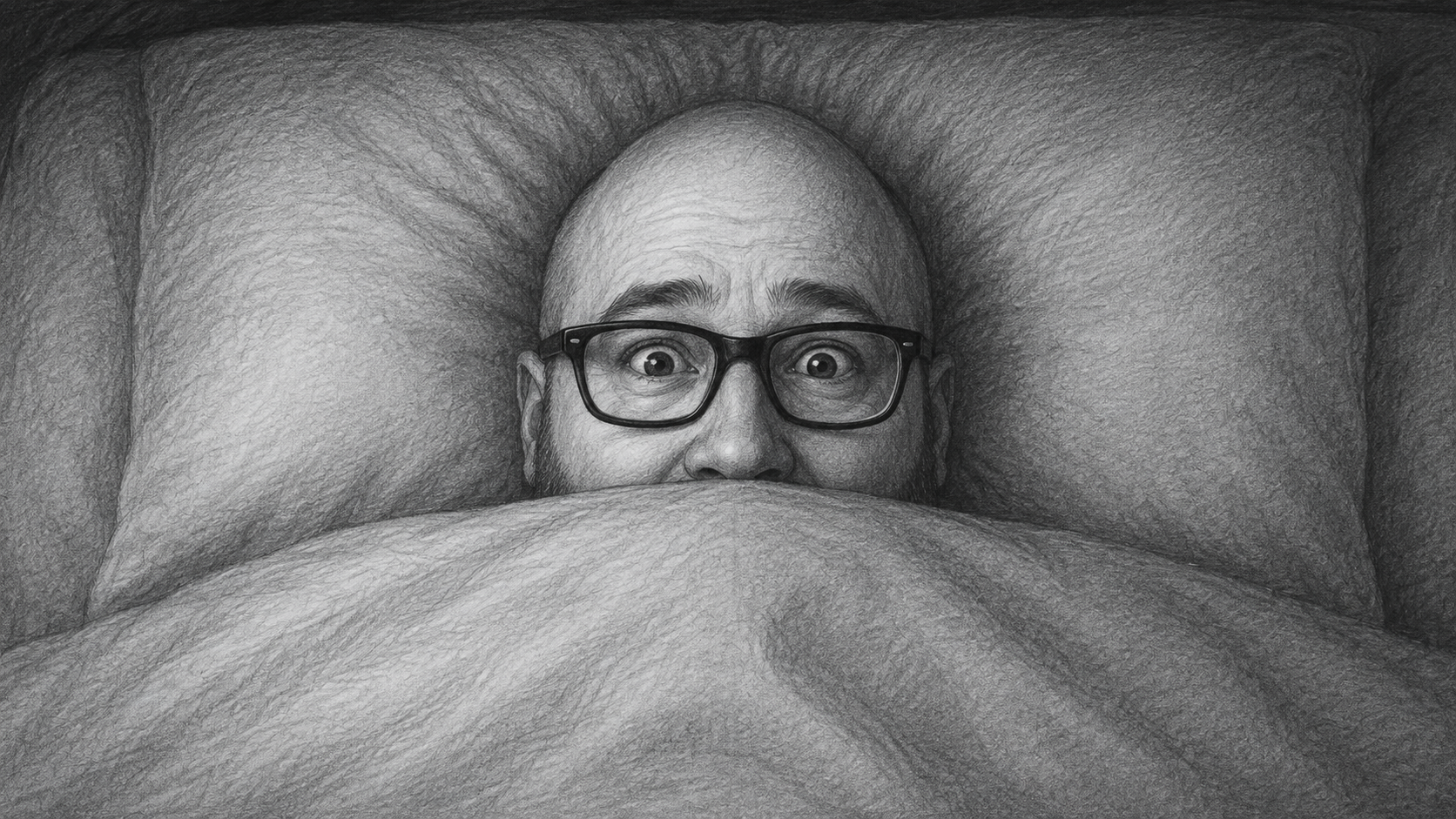
There is a particular kind of terror that comes with writing honestly about oneself. It isn't the terror of the blank page. It's the terror of the finished one, the moment you realise a sentence you wrote about your own past is going to stand alone in front of strangers who never knew you as a boy and will judge you entirely on the version of yourself you handed them.
In my case, one of those sentences is about the animosity I felt, as a young man, toward the National Party and, if I'm honest, toward Afrikaners as a group. Not a nuanced political disagreement. This was a gut-level hostility formed the way most prejudices are formed in children, by absorbing the world around me without questioning it too hard. It was compounded by Mister Mybergh, who beat me with a wood slat he pulled up from the shower floor, the brownshirted swine at veldskool who made me run up a mountain every day because I was fat, and the dour old people who berated me in Afrikaans if I failed to call them "oom" or "tannie" (uncle or aunt). I grew up on the English-speaking side of a divided country, in a home where the Nats were spoken of the way you'd speak of a disease, and Afrikaans culture got lumped in wholesale with the government that claimed to represent it. I didn't interrogate that. I just carried it.
That changed, obviously. Life has a way of introducing you to actual Afrikaans people who believe differently and shatter the illusion, actual friends, actual kindness. The caricature you were handed as a child doesn't survive contact with real human beings. But the book isn't about who I am now. It's about who I was then, and part of writing it honestly meant putting that ugliness on the page rather than editing my younger self into someone more palatable.
And that's where the fear lives. Because readers meet you on the page, not in your life. Someone opens the book, reads a passage about young me nursing a blanket resentment toward a whole group of people, and they don't get the forty years of context that came after. They get the sentence. And a sentence like that, in this moment, with everyone primed to sort people into good and bad on contact, is an invitation to be excoriated. I can already hear the accusation forming somewhere. That I'm a bigot. That I haven't grown at all, and the confession is really a confession of who I still am. That I'm airing views nobody needed aired.
“When everyone is primed to sort people into good and bad on contact, Barking at Dogs is an invitation to be excoriated.”
I've thought about softening it. I added a disclaimer up front, a little flag that says don't worry, I know better now, please keep reading. Honestly, I've thought about cutting the hard parts altogether and letting the reader assume I was a more enlightened teenager than I was. This would have been safer, in the narrow sense that fewer people would have had a reason to be angry at me. Cutting the warts-and-all young me would have been a soft-pedalled lie, the exact lie memoir exists to plough through. If you sand down every rough edge of your younger self until he's likeable, you haven't written a memoir. You've written a character.
So, the sentences stayed. And underneath the fear of how they will land, there's something steadier that I keep coming back to, which is that the discomfort is the point. A book that only tells you things you already agreed with before you opened it isn't teaching anyone anything, least of all the writer. I didn't grow out of that early hostility by being told it was wrong. I grew out of it by living long enough to have it contradicted, repeatedly, by people who deserved better from me than a lazy inherited grudge. If the book does its job, that arc is visible on the page too, not stated outright but felt, the way it actually happens in a life.
I won't pretend I've made peace with the exposure. I check my phone more than I'd like to admit now the ARC copies of Barking at Dogs are out in the world, half expecting the next review to open with a description of me that I won't recognise and won't be able to argue with, because it will be built entirely out of my own words. That's the deal you make when you write about yourself truthfully. You don't get to control the reading. You only get to control the writing.
What I keep telling myself, on the nights this particular fear shows up, is that the alternative is worse. A memoir written to be safe is a memoir written for nobody. I'd rather be misread for telling the truth than praised for telling a nicer story that never happened.