
Christmas is coming!
Buy a signed copy with a personal message from the author.
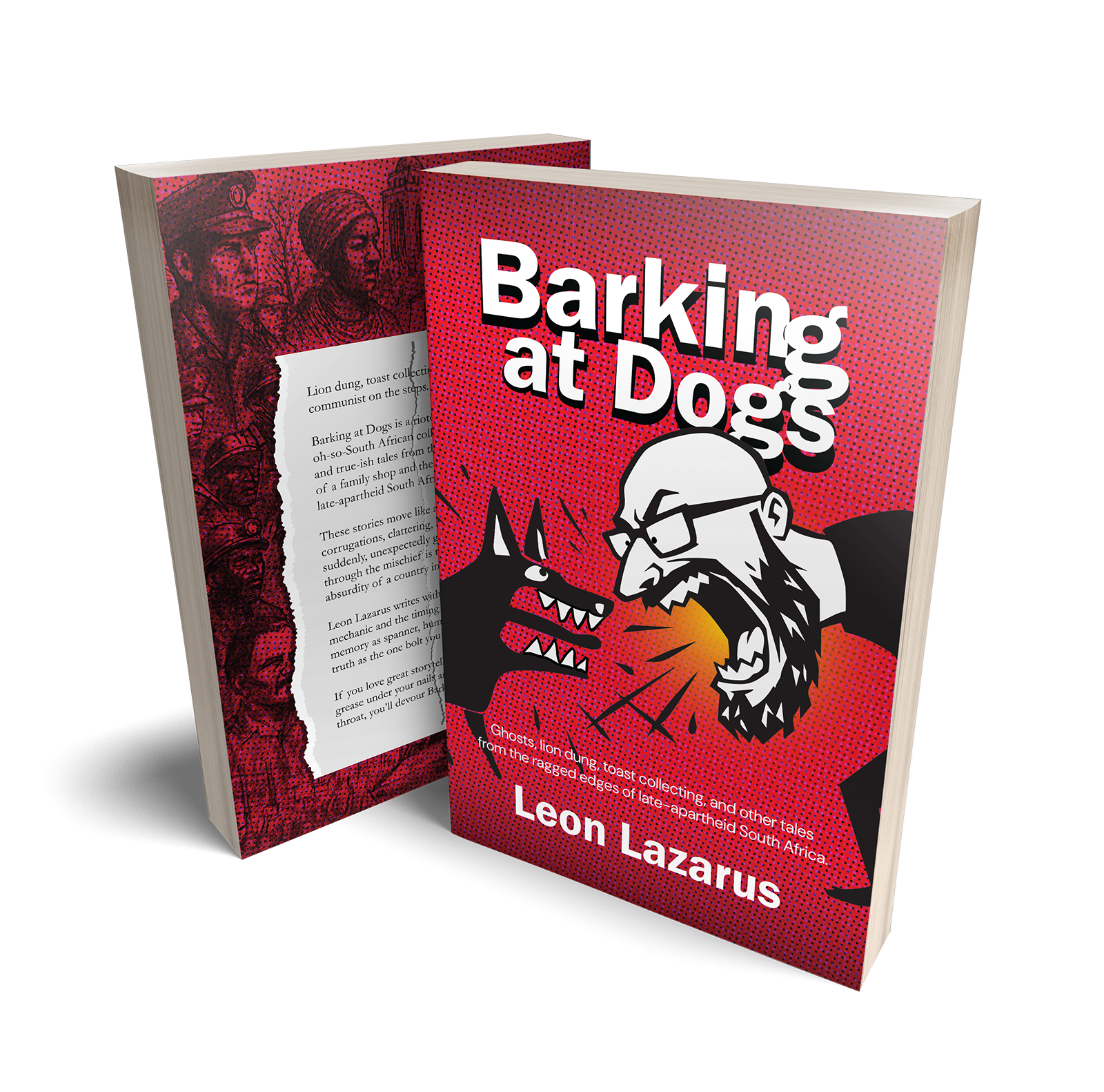
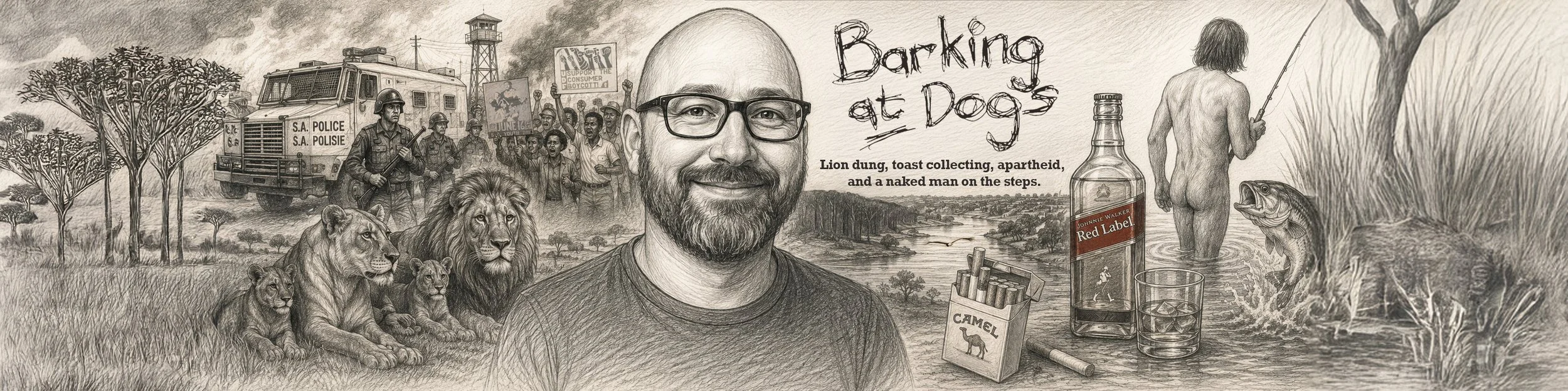
Johannesburg in the seventies and eighties. A family piles into the car for a Sunday soaking in the steaming pools of urine and chlorine in Warmbaths, and years later two student hippies take a dodgy bit of advice and fetch a bag of lion dung from the zoo in the back of a borrowed pickup.
Barking at Dogs is a collection of stories based on Leon Lazarus’s life, coming of age in apartheid South Africa. It’s funny and often rude, and it will get you talking about memory and about how a whole country can lose its way, find a path back, and lose it all again.
Every copy is signed by the author. If you’d like it made out to someone, put their name in the order notes.
Paperback, 194 pages.
Also available at these fine retailers
USA & Canada



UK

Australia



New Zealand
South Africa


EU

Buy direct from the publisher
Barking at Dogs is a memoir disguised as fiction, or fiction trying to confess its way back to the truth. It’s about growing up white in apartheid South Africa — inside the machinery of a system so absurd and cruel that, for years, most people living in it stopped seeing it at all.
The stories move through family mythology, border towns, military roads, dogs, music, the Voortrekker Monument, and all the small daily performances required to survive inside a moral catastrophe. The narrator is funny because South Africa was often ridiculous. He is uneasy because the ridiculousness came with victims. And he spends the book trying to understand what it means to have been both witness and beneficiary before he was old enough to understand the difference.
The book opens with a warning: memory is unreliable. It lies. It edits. It protects itself. Some of these stories happened almost exactly as told. Some have been embellished for narrative survival. And some are, in the author’s own words, “complete bullshit balanced precariously on a thin scaffolding of truth.” That uncertainty is part of the point.
Barking at Dogs is for South Africans who left and still carry the country around in their nervous systems as much as it is for those who stayed. But it’s also for anyone who grew up inside a culture that normalized injustice — and who later had to untangle what they were taught from what was true.
A Note on AI and Barking at Dogs
I want to be straightforward about where artificial intelligence did and did not play a part in Barking at Dogs, because you deserve to know what you are reading and who wrote it.
The stories are mine. Every word of the book was written by me, from memory and from a life lived in the places these pages describe. No part of the text was generated by AI. The voice on the page is my own, for better or worse.
Where I did use AI was as an editing aid. In the same way a writer leans on a spell-checker or a copyeditor, I used AI tools to catch typos. I read an AI generated report, and made only the suggested changes I found acceptable, by hand. Nothing went into the book that I did not type and stand behind.
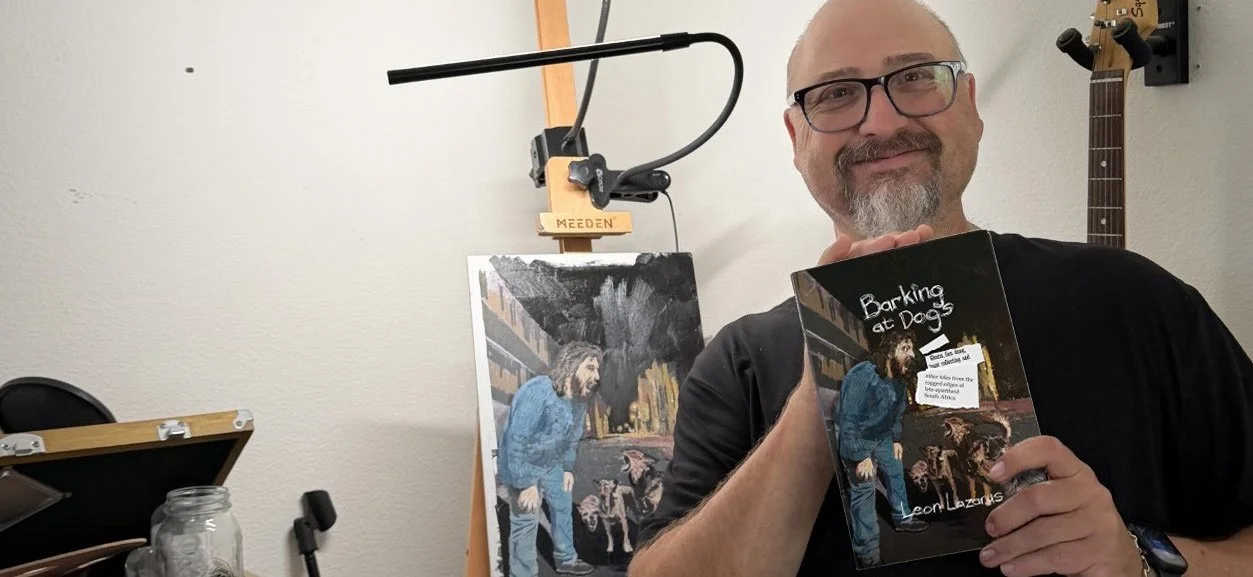
Some of the interior art was created using AI imaging tools. The front and back cover were created using oils, acrylics, pen and pencil. The ARC books show an early AI generated cover, and were sent out while I was working on the painted art.
I am telling you all of this because honesty is the least a reader should expect, and because the line between a human writer and a machine has become an easy thing to blur. I would rather you knew exactly where I stand. The heart of this book, the memories and the telling of them, is entirely human.
Leon Lazarus
Get In Touch
If you're interested in contacting the author, complete the form with a few details about your request. We'll review your message and get back to you within 48 hours.